Haiku

What it is
Syllables counted
Five-seven-five; clear, simple -
Captures one moment.
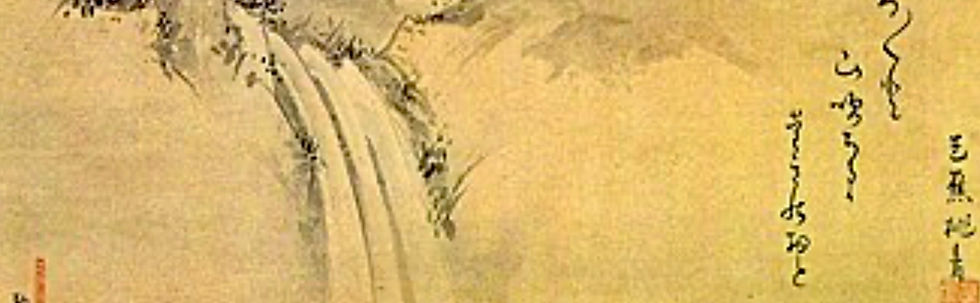
The Haiku Society of America say Haiku are “the smallest poems, consisting of 17 syllables arranged in a sequence 5-7-5”. Basho, a supreme master of the art, adds, “Haiku is a description of what happens in a particular Haiku moment.” It is an ancient Japanese art form dating from the medieval period, from the 8th to the 13th centuries A.D., when it was known as Hokku.
People who do not know Japanese will never experience the beauty of great Haiku, since it is untranslatable. Japanese has 50 sounds made up of 5 long vowels, 5 short vowels, and 14 consonants, while English has only 5 vowels and 21 consonants. Words are different, too. Thousands of non-phonetic Han characters can combine to create unrelated sounds. Consequently, Japanese Haiku rarely has more than ten words, which swallow the 17 syllables, and sometimes as few as three. Translations, therefore, break the syllable rule. For example, this poem by Basho:
Old pond
A frog jumps in.
The sound of water.
Another structural expectation is that Haiku has two divisions that differ, such as the static “old pond” and the dynamic “a frog jumps in”. The division is sometimes marketed with a dash (-). My first ever blundering Haiku has the same theme but sticks to the 5-7-5 syllable structure:
A blue crisp morning.
A frog sits by a still pond –
Plop, ripples, silence.
Finally, the words change with the seasons. Blue, crisp morning and frog are associated with spring, so would be wrong for a Haiku about winter.
It all sounds constricting, but the Haiku masters do break the rules when necessary. It is like George Orwell’s rules of writing, where the final rule is “break these rules before writing anything ‘outright barbarous’”.
If you fancy writing Haiku, here are two useful cribs:
1. Wonderful syllablecounter.net that is so good that I usually write Haiku in it.
2. Juhee Singh’s A Pocket Full of Seasons that lists the seasonal words.
By the way, Haiku are not the smallest poems. According to the Poet Laureate, Simon Armitage, that prize goes to “Flea “by Strickland Gillilan:
Adam
‘ad ‘em.


Comments